
Showing posts with label Good Ideas. Show all posts
As I clean out last year's planner, I thought it would be interesting to see what is in it besides my plans.

These are things I.cannot.throw.out. I need them like security blankets. Really, and I am 55 years old and have taught math for 32 years.

The items that will also go into this years planner book:


  • Health Care Clinics in Sonoma County-- a two page document with EVERY kind of low cost or free mental health and physical health clinics within 50 miles of our campus.


  • 5 Practices For Orchestrating Productive Math Discussions Cheat Sheet--Side 1: Set Goals and Select a Task. Side 2: Anticipating, Monitoring, Selecting, Sequencing, Connecting.


  • CF Icebreaker Questions--150 questions to ask kids as they high five you out the door.


  • Warm-Up Blank--I am always running out of these and needing to copy more.

  • Making Number Talks Matter Grades 4-10--a progression from Cathy Humphreys and Ruth Parker.

  • A Rumi Poem--Out beyond wrong doing and right doing, I will meet you there. 

  • A Quote From A History Teacher's Door--Some getting more rights does not mean you get less, it's not pie.


  • Finding the Words: Leaning the Language of Mathematics--An article by Drawing On Math on increasing equity in math through strong vocabulary. Tina gives us a road map to meet students where they are at, but not leave them there. 

  • Strategies For Students To Move Around--from I have no idea. 

Things that are in there because they gave me comfort, but won't be carried with me next year (but may get filed for handy reference).


  • CPM Lesson Plan Blanks. They are helpful to review. 
  • Lots of Scratch Papter
  • More Scratch Paper
  • A Blank Name Tent. After not seeing the students for two weeks during the fires last October, I re-introduced the name tents. First Question: What strength do you bring during challenging times?
  • An Algebra 2 Test. I picked up it up off the copier. It has 19 short answer questions on one page. It was a reminder to ask College Math Educators how they format tests. I did ask, and it wasn't like that. (This format makes my ADD brain hurt)
  • Sub Plans 
  • Natural Circle Measures--A lovely introduction to radians by The Roots of the Equation. 
  • Revised Assignment Sheets
  • The Binomial Theorem Jigsaw by https://mathcoachblog.com/ This a beauty. I think I will use it early in College Readiness. You know, before the SAT. 
  • Commonalities Among the Practices in Science, Math, and English Language Arts. A venn Diagram. Mostly around arguing from evidence. 
  • 2017-2018 Pacing Guide. Every day of the school year, Fall on one side, Spring on the other.
  • My Book Club Reading List. I read 3 out of 8 btw. 
  • My Favorite Guest Post from Ilana Horn's Daughter.  https://teachingmathculture.wordpress.com/category/guest-post/
  • A Swim Workout that I can no longer translate. 
What are the items in your planner that provide you a sense of well being?
A big topic at TMC this summer was Social Justice and Equity. We looked at who we are, fairly white, and wrestled with how do WE represent our students. Grace A. Chen and Carl Oliver gave us platforms to express ourselves in honest and fresh ways.

How do we become Allies? The most popular solutions were to "push in" observations about where stereotypes come from to grow awareness and compassion and to be meaningful about our "whys" and our speech if we teach in mostly white schools and "push out" observations about stereotypes and be meaningful in our intentions and speech if we teach in diverse schools. (please let me know if I have this correct TMCers)

As I was sitting with this information and getting ready for school, I was listening to Pod Save the People with @deray interview @Common. It was a very moving conversation about change. Deray asked Common what advice he could give to young artists to use their voices to make change. "Ask folks what they need." Deray echoed, that sometimes well meaning people think they know what folks need, but that is not what they want or need. So now he always asks, "what do you need?" Common said it is "empowering" for people to listened to be part of the solution. Both agreed that asking was the key to becoming an Ally.

With all this in mind, on Monday it was time to ask for Question 2 on my student's name tents. I scrapped, "What question do you have for me?" and changed it to "What do you need from me?"

Ernesto says, " I am friendly, but slow at math, I just need patience."

Donnie says, "I need help if I don't understand something."

Serah says, "I need you to be understanding about my struggle with anxiety and depression."

Christina says, "I need you to be organized."

Lorraina says, "I need to be valid victorian." Wow. There is a challenge!

These are teenagers speaking their truths. And I get to be fortunate enough to let them know through my words and actions that I am their Ally.

 Carlos let me know how important this question is:

Just when I think I am the giver, I get so much more.

How would you spread this message with your school, colleagues, and parents?
In these crazy times, I wanted to share a positive lesson that actually had the impact I was looking for! Imagine!
I wrote last year about how I was on a proportional reasoning kick. The lesson didn't get the "wow," I was looking for, so I switched it up this year.
Both started with an old project I used one year teaching 7th grade Humanities in an International School in Ghana: http://www.100people.org/http://www.100people.org/statistics_100stats.php?section=statistics:
The 100people site translates the world population into a village of 100 people. I asked the students to to do 3 things: Translate our school population to a country of their choice, present their findings and create a poster with at least 4 info graphics. The students had to determine how many people each student at WHS represented in their country and had to translate 10 aspects of their lives to those of WHS students. We used the above website, that was updated for 2017(!), the CIA World Factbook and the Worldbank Data page to translate a country of their choice to the population of Windsor High School--our suburban high school of 1712 students. It was the start of the new semester and a way to front load proportional reasoning in Geometry.

The presentations were so-so. A few got how to move from "proficient" to "exemplar," (Rubric)with some examples that I provided from my chosen country, Cuba. (Imagine if you were a Freshman an d you weren't allowed to use the bathroom at school. That is how many people in Cuba have no access to indoor plumbing.) I haven't graded the posters yet, but they look amazing, pictures to come. What has got my attention at the moment is the reflection papers. I have been making phone calls home to express to parents my appreciation for what their students have taken away from this project.

Angela on Brazil," We are extremely fortunate for all we have here in the United States and this project opened my eyes to that."
Brandon on his project about Switzerland," These types of projects make proportions fun to learn...This project should continue to be done every year because it will help people understand proportions a bit better."
Colton on his project on Italy, "The main thing I have taken from this project is how lucky I am to have grown up in Windsor with the luxuries I've had. So many times people take electricity, sanitation and drinking water for granted."
Tatiana on Greece, "I found this project to be a cool, eye-opening project and I definitely enjoyed doing it."
(Please note, the first names here sound very Anglo, however, the majority of them have Hispanic surnames.)

The students are now going around doing their presentations in their science classes that are studying food, food access, and contemplating how we will feed our 7.5 billion inhabitants.

Here is the project hand-out and Rubric:If Windsor High School Were...

Please let me know how it goes for you if you try it, or if you have any suggestions. Check back for pictures!


Closing the Lesson
Tracy Zager emphasized, "Close the lesson," at TMC 2016. Although my
#1TMCthing is to be a math evangelist, I am focused on CLOSING every lesson because, well, I got the message.


My goals for the first week are twofold. We do mathy things in here from day ONE and our classroom culture supports everyone's success. Fast forward to Friday, the end of the first week of school. I was introducing the idea of precision when generating definitions in Geometry. Fondly called, the "unbreakable" definition. Can one draw what you write, meet the criteria, AND not draw what you meant? Time to revise your definition then. We started with Widgets and a lesson Lisa Bajerano wrote about two years ago:

I had the students make a list of the characteristics of a Widget and then write a definition. I told them we would put all of thoughts together to build the most precise definition. My brain did a silent little leap and went to, "like when we used to play Monster with the girls." Monster went like this:

Everyone (usually four) of us started with a blank piece of paper folded from portrait direction in quarters. 

Hiding their drawing from everyone else, we each drew a head, neck and shoulders on the first quarter of our paper. We each drew the connecting lines about a quarter of an inch onto the next quarter, and then folded the first quarter back, so the next illustrator could not see what we had drawn. 


The next person adds on (again without seeing what the first person drew) the arms and torso in the second quarter and the connecting lines 1/4" into the third. 
Arms and Torso
The paper gets folded back again, so that the next illustrator cannot see what drawer 1 and 2 have drawn. The third drawer makes the waist and the legs to the knee and the 1/4' connector lines into the fourth quarter and again folds the paper back so the next person cannot see anything but the connector lines that have been drawn so far. 
Waist and To Knees (ignore yellow for now)
The fourth person finishes the drawing with by adding the rest of the leg and the feet. The paper is then handed back to the original person to admire, laugh
Okay, so waist to knee was open to interpretation. 
at, and give the creature a name. SO. MUCH. FUN!

The activity takes a full ten minutes.


%math %blog %education %learn %cool
Week 2
My Favorite Things:

Favorite Geometry Activities: Too Much Trash. Guess I am a proportional reasoning kick. "If everyone in Windsor lined up their recycled papers for a year it would reach 249, 289 miles! That is 4,000 miles shy of the Earth to the Moon!" Says Casey M. a ninth grader in my Geometry class that took the amount of paper his family uses in a day, and extrapolated the data based on Windsor, California. *Just found out cannot link to document on Blogger, so just message me for copy of project and Rubric. 

Off the Quadrilateral Island: This is a simple little sort we did with Quadrilaterals. I gave groups of 3-4 students one line of this hand-out: (Not mine, got it from Google, can't find my original source, does anyone recognize it?
%math %blog %education %learn %cool


The directions are for students to use the proper marks to show your assumptions about each figure in their row. Then decide which quadrilateral doesn't belong and explain why. The product is a poster that explains the attributes of the survivors and why the quadrilateral they choose was kicked off the island. We did a gallery walk. The students only got 20 minutes to decide, plan and make the poster. 


Favorite Ice Breakers:
From Dinner Party Download Podcast: The hosts, Chuck and Josh, ask all their guests two questions: What question are you tired of being asked and what is something that we don't know about you. 
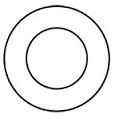
Another is: Uncommon Commonalities. In a group of 3-4 (preferably 4), one student, say the oldest, draws a pair of concentric circles. 
Have students divide up outer ring with the number of students in group. Each person has to find something unique about him/herself to put in outer ring. In the center ring, they have to find something they have in common, can't be about school, the town they live in, or gender. Some pretty interesting facts come up. My favorite was a group of two boys and two girls, where all had at least two pierces in their ears. You get unique allergies, folks who play instruments, black belts, people who were born in other countries, all kinds of cool people tricks. 

Favorite Places to Get Insight:
Twitter: #MTBoS
Desmos
Geogebra
Wolfram Alpha

Favorite New Source for Mathematical Thinking:
If you teach any kind of proportional thinking, you have to check this site out! 
Example:
%math %blog %education %learn %cool

Love! 


Student size whiteboards. Check. Now we need verticalness, and my DH is outta town. Not that I mind swinging a drill, it is just going through the shower board and not sure what to do if it shatters. (Also, who knows if I am allowed to screw things into the wall, I just did it and figure I will ask forgiveness, but wait, this is why I am so sure I have little to worry about...)
Ephinany:
Mirror holders! Yay! I am so happy and the boards are so secure. There is a plastic bit that expands as you screw it in.
(Sorry about the ugly brown walls and the funky picture)

After a full last day before the kiddos also occupied the school, I did collected these in my backyard:
And made a peach, rhubard, raspberry, apple crisp (sorry no pic).

Happy First Days of School ya' all. More on that next post.
So two things are running around my head today.

First, is all the growth mindset stuff inspired by Jo Boaler from Stanford and Carol Dweck who wrote the book Mindset. I love it! I love the message. Productive struggle makes positive change. I was inspired by Sarah Hagan and her post on this bulletin board that she made from inspiration from @druinok http://statteacher.blogspot.com/


Gorgy, right? But then I started thinking about the students owning the space and the words. So now I am thinking, I will ask the students to write their negative thoughts about math and learning and then have them work as a group with one card at a time to change the words to growth mindset statements (we will do first one together), then I will make a bulletin board! I promise I will take pictures and share them. The Dollar Store has gold starts for, yup, $1.00. Hah.

The second thing is Christopher Danielson said at TMC 15, "Find what you love (about math) and do more of that in your classroom," (see my previous post). Well, I do love listening to NPR and I do love Freakonomics, and I just love this very, very special episode:
How to Create Suspense
See the graph paper in the background, math, right?

Everything is in there, a movie producer, sports, a crime novelist and the question, what makes something suspenseful? What is the most suspenseful sport? What could you do to make a sport that is more suspenseful? (silly economists didn't know the rules to Quidditch).

We can appreciate this episode, or we can try to bring into our math lives. #WCYDWT

What/whom do you listen to that makes your math heart go pitterpat?


Got a new Chromebook (Thanks Tech Guy and District) and I am having fun keeping track of all my Mathy Friends from TMC15 and those I have followed for a while now.

I love sayings and being inspired and inspirational. (Do more of what you love, Christopher Danielson) Here are some of my favorites old and new that decorate my room.

New: Hannah, 17, a rising Senior, shared this one with me from her Twitter Feed:
The next one I have on my wall and also on the cover of my daily binder where I can see it.

The next one needs no explanation and has a prominent place in my room:

This one is front and center:

My favorite and well worn poster is this one because I have worked most of 29 years in two high schools in the heart of Sonoma County wine country and it is the heart of the growth mindset.

And this one:

Ummm...this too:

I do have the 8 math practices and "Welcome to Mathland" so you don't think I am a complete hippie. Women, where are you? I want the 4 Claims too.

I would like to add this one but maybe I just need it personal-size:
My teenager and her friend think I should add this one:

What's on your walls?
BTW: If you like Make and Takes, or need an awesome activity for Pre-Calc/Trig, I presented this "My Favorite," (#TMC15) a foldable for finding the formula for the Sum of Angles for Sine and Cosine that SHOWS why cos (x + y) ends up being subraction!


This post doesn't really fit into any of the MTBoS explorations this go round, maybe what makes my classroom uniquely mine round 2.

First off, I made the best smoothie of my green smoothie life, cures whatever ails you and gives you a mid morning nutrition blast that has become quite the habit. Pack it in a mason jar for that needed pick me up: Into a strong blender goes: 3 pitted dates, 1 pear, 1.5 carrots, rib of celery,  1/2 inch cube of ginger, two big handfuls of spinach, and .75 cup of water. Start blending on low, turn off, pack with a spoon, then blend on high until smooth. Heaven!

I have been working to pull my Advanced Algebra students out of the Algebra/Geometry For All model and into the "let's get ready for college thinking" mode. Instead of "here are three ways to know and graph quadratic functions", I let the graphs drive the equations, forcing the students to  come up with silly scenarios to write model equations. They were a lot more fun to grade and a lot of pride went into them. Honestly, I am not certain yet that deeper learning happened, as the kids stressed about getting them done. I did do one CCSS tweak to the whole thing. The first round was so awful and so lacked understanding, that I made comments on sticky notes, and had the students revise them. I realize I could have had the students do this step, and I needed to get the project going in the right direction before the students would be able to comment.

I asked the students to come up with three equations to model quadratic functions, one that utilized vertex form, one that utilized factored form and one that required students to use a system of linear equations to find a, b, and c. A lot of good discussion came up around where to place the axes and what does it mean when a isn't negative, even when we know our graph should be upside down. The graphics, of course, were the best part. I thinking mapping the path of Skittles into the mouth of the a person across the room, frogs lapping up flies mid jump, and swan divers make a case for a little psuedo-text license. Just saying.


Ha! I am one of those veteran teachers that Sam Shah was referring to when he said, If you feel like you aren’t awesome at teaching, welcome to the club. If you feel constantly like everything else you see out there is better, welcome to the club. I love you Sam!

Ack, I am even an emptynester
this year for the first time and don't even have a pipeline to popular culture. I doubt my students give a rip that I saw a 2 year old movie about a pharmacist obsessed with Woody Allen at the Jewish Film Festival, or Foyle's War on PBS, or what the latest Economist has to say on Freakonomics Radio.

But, AND here I am trying to share what I know and get better. That's the thing, right, 28 years and I can do better, get better, learn how new minds think and what gifts you all bring to the table.

I am not the teacher who invents fancy new dances like the Dishwasher and Gravity, I don't play the guitar, (I used to beat the crap out my football players doing pull-ups (not chin-ups) until I broke my arm last summer), AND what I do have is SPUNK. I can be 50 and still be S.P.U.N.K.Y. One of my new students commented, "you are optimistic aren't you?" Yup, yup, I am. I am so sure you can do this thing, because I did, I have and believe you me, you are better than I am because I am pretty confident you didn't have to go through what I did to get here. (and thank goodness for that...living on my own from age 14-15...not what I would wish for any teenager.) I never, ever, sit down. That's my schtick and I am sticking to it.


I do want to share with you a super fun activity that occurred in my Geometry class the other day.

I gave each group of four students a statement. (Thanks to Julie Reulbach for the inspiration). (I love you too, Julie!) I always give the students some way to assign tasks like materials getter, writer, speaker, time keeper, by having them figure out little details, like who has the most pets, who lives farthest from school, who has the youngest sibling, who has the "most expensive" first name (118 for Gustavo),etc...That is something I think makes my classroom "mine."

The students needed to write the statement as a conditional statement, decide whether or not it was true, and draw or explain how they knew what they knew.They did this on whiteboards.

We had the best conversations. Are three collinear points always coplanar? Are all right triangles congruent? Etc...And here is the twist. REVISION! Pick one, take it home, make it yours, and make it better! Rewrite the whole darn thing, especially if you don't agree with the conclusion, and for fun, I added, write the converse, inverse, and contrapositive and determine whether or not each of those statements was true or false. If I had stuck to the "lesson schedule," I would never had the wherewithall to extend the activity into homework that has some nice chewy bits.

Happy Fall Everyone! and Thank you for welcoming me into your MTBoS. You are the best.
I am linking up with Carol at Real and irrational who is inviting High School Teachers to add to her First Day Activities for High School Math Teachers. ( This is really kicking my butt to remember all the years! I have notes in my planners like: Card Sort...and guess what? I have moved rooms so many times and packed up so many times, I have no idea what that means)

Here goes:  (90 minute block)

Action:

Finding your seat. I put students is groups of 4. As the students enter, they get an index card with an equation to solve or expression to reduce. Sometimes the number is related to trivia: The number of children Ms. Z has (2) , or silly, like what a golfer yells before he hits the ball. There are 8 sets, the students have to find their table and take one of the seats. It always a good idea for them to figure out if they are in the correct place with each other. The difficulty of the card relates to the subject.

Rationale:

Students get the mindset straight away "This is a math class and we do mathy things, even on the first day."

Action:

Students find a "mathography"
survey at their table that they can begin filling out.  Also, there are very bright card stock "calling cards, " that have my email and the class website on the front and a supply list on the back.

Rationale:

We all need time to find the classroom, I need to take role, I want the students to know right away that I care about who they are,  and I don't want to overwhelm the students on the first day with a big 'ol long syllabus with a bunch of dense language making their heads spin. They need to get the essentials right away.

Action:

Uncommon Commonalities:

The students make 2 concentric circles on a piece of paper. Then quarter the rings. First they write their names in each section and something unique about them. Then in the center they have to figure out something they all have in common. (No age, grade, where they live...gotta dig deeper!) We then go around the room and introduce ourselves. (I have the eldest be the speaker, the youngest be the scribe)

Rationale:

It is important for the students to get to know each other and I use this activity for my first seating chart.

Action:

Ignite speech. First time for this. Running with Andrew Stadel.

Rationale:

Why are we here? I notice and I wonder. Setting the tone of collaboration and grit, self-determination and growth mindset.

Action:

I have done many math tasks, depending on what I am teaching.

For Algebra I start with 4 fours. Students need to number their papers 0 -10. They must use exactly 4 fours and any operations to achieve the values from 0 to 10. I have them work silently at first, then in pairs, then in whole table groups. We do a whip at the end.

For Geometry and Advanced Algebra I have started with CPM's: Yarns.
Basically the students get a length of yarn per table. They then must build a square, a 5-pointed star, a square based pyramid, etc...

For Pre-Calculus we start right away with family of functions. Tell me everything you know.

Rationale:

Working together, working on math tasks, students get a feel for what assumed knowledge I am expecting.

Changed Actions for this fall because I am smarter and wiser and taking Jo Boaler's How to Learn Maths Class, a Stanford supported MOOC.:

Instead of the above Action, I am starting both Geometry and Advanced Algebra with a number talk. (See Jo's Class for this).

Rationale:

We all have something to bring to the table. Math study is fluid, not static.

Advanced Algebra Action:

I will use Math Munch's notion of Fraud from the Park City Mathematics Institute with flipping coins and cryptography.

Rationale:

Multiple entry points, and where's big kid panties at the same time.

Geometry Action:

I will be stealing, finding/using something from the CCSS or MTBoS


Have a great opening day and best wishes for a growth year! 

(Come back for links to my ignite speech slides, my mathography blank, and uncommon commonalities blank)


MS Funday Sunday is hosting a link to Math Stations:

This was the one of the most fun activities my colleague, Jessica, and I did with our Algebra 1A students.

We put Four 3 and and Two 4 digit pad locks at stations around the room. Then we made easy to horrendous Order of Operations problems that gave the correct combinations to unlock the locks. The students were so motivated! Talk about self -correcting! I guess we could have put candy inside a lock box or free homework passes or stickers...Eh...

One answer even had a fraction so that the answer 86 1/3 was the four digit combination, and of course, one decimal answer too.

What other kinds of problems can you think of to come up with combinations for the locks? You could have answers labeled 0-9 for any type of four problems per page and the answers that match those digits (say 3.375 seconds is an answer attached to digit 7). Hmmm...
I could have asked this:

There are 54 countries (most of the time) in Africa. There are 196 (mas or menos) countries in the World. What percent of the World's countries are African?

Instead I asked this "What percent of the world's countries do you think are in Africa?"
We recorded the guesses...

Then we did this:
How many countries are in Africa?
And then we did this:

How many countries are in the world?
And THEN we framed the question and wrote an equation and solved it. So much more fun!

We were also revisiting a poorly written test question (by me!) on purpose. Well it had a purpose that didn't work on the test, yet I was still able to use it when we discussed the "correct" answer. (I purposefully made the question so that there wasn't any one correct answer, however, I neglected to have the students explain their answer.)
 

Marianna said, "I wrote California if you are talking about size, and New Mexico if you are talking about percent of land," (Yah, Baby!) (I won't mention the the kid who said, "New Mexico is a state?")

Then from some lovely blogger who gave me the idea, I threw out there: let's add another column,

Forest Acres per person? Would that change our opinion?

I just love those teachable moments when everyone is arguing about...numbers...

What was your most recent teachable moment?

PS Sorry about the horrible image insert job, I am learning! 


I am thrilled. I am hopeful that in the next 4 years I see the real movement that I voted for to come about 4 years ago. Let's move forward powerfully and courageously.

I have tried many ways from discovery, to begging straight up: "these are the rules" to help my Algebra students work through properties of exponents. I had some success with a process I called, "1 by 1." We did 12 problems in shadowed boxes:


Given an Exit ticket of 5 problems where the average went from 3 to 7 out of 10, I'd say it was successful! Yay!

Hot tip of the day: in your windows "accessories"  you will find the "snipping tool."  It is so easy, even I can use it:

You can capture what is on your screen, like a screen shot, and save it as a Jpeg to use in...your blog posts!

I made this Tarisa Puzzle:

It takes a 18 x 24 piece of construction paper to complete: Here is the first part:
The next thing will be for me to write Tarsia Puzzle and this will be live for you to download. Anyone? Anyone?

Happy Martin Luther King, Jr. Day!
Do you all know the Ipad Ap: Educreations? For all I know it is a program for Macs and PC's too, and, er, I am not the expert, yet...

So on Friday I promised my students that I would leave the Smart Board notes for them on the class website. Yeah, but guess who hit the "Don't Save" button before she left for the day? Yup, yo. So I recreated the main points on little video. Can't say it is the most watchable thing out there, yet it is me, and there is always the pause button for the kids.
Happy Holidays! Phew, right? I wanted to the end the year with some positive activities.

The first one is an INB entry I called "Cuff and Link" to remember the difference between less than and less than or equal to: (Why Cuff and Link? Guess the movie reference and I will send you an amazing freebie!)


The next one is a project I stole borrowed from some amazing math teacher who took her students on a journey to save a princess using all kinds of equations of lines and line inequalities. I didn't have that much time, so I shrank it for a one-two day project. I was super pleased with the outcome...well, 99% of the time...So basically there is an Evil Tower hiding the prom tiara and crown, a magic key that opens the tower, the prom castle, the rival school boundary where they tie up people and paint them red and black (our colors are blue and white), and the limo graveyard filled with quicksand. Here are some of the treasures: Leave a comment if you want the hand-out.

One of my love bug Freshman...currently a D student with 99% if this project correct and a lot of heart.


This one missed the, uh, boat.

This Freshman did some of her best work, ever! (a C student)


And well, this Junior, with all his issues, has amazing drawing skills and a delightful imagination.

I, too, love my students. I love my job.

Now if I had a magic wand so I could protect, rescue, and save all my Algebra students.

Thanks for sharing this journey with me!

Amy