Showing posts with label #MTBoSblaugust. Show all posts
Happy New School Year! Sam over at https://samjshah.com/ (You should check out his blog because, he is Sam and he is awesome!) reminded me us that there is a hashtag for folks like us: #MTBoSFD (Math Twitter Blog O Sphere First Days). He also promised to blog twice for


Thanks to @druinok. So here are my our First Days Stations inspired by @magicalmsmurphy.


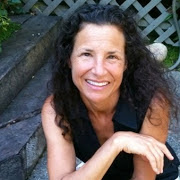
This is Danielle:
She is the most amazing math 

teacher ever. See that precious bundle on the right? Danielle is so creative, she made a baby and took a year off from teaching. I am so over the moon that she will be my neighbor once again this fall. I have to share her 1/2 time with precious baby bundle o' joy, but that is okay. 


Inspired by  @magicalmsmurphy, an English Teacher in Los Angeles, California we took her idea and sat down today 
for three hours plan our own first day stations. We have 90 minute blocks and will have the students move 
stations every 7 minutes. We will give the students 90 seconds to get to the next station. 

Created by Danielle Graff and Amy Zimmer for grades 9-11

The Purpose:
1) To establish that our classrooms are learning communities.
2) To establish that we Math everyday in our classrooms.


The Set Up:
Students will be randomly assigned to groups of 4.
We will practice how to move around to stations before we let the students actually get to work/play.
Students will go through an introductory activity before they move to their station work. 
We decided that the students will have a record sheet to bring with them for each station. Not all stations
will have something to record, but we want the students to get accustomed to having evidence of their 
learning. 

Behind The Scenes:
Danielle being Danielle, and the master of all things organizational, started a Google Doc. We designed 
the stations, then went back and determined what was needed for each station (my idea--just so you get 
that this was truly a collaboration). Then we went back through and assigned the needed tasks to each of us.

Husband: You spent 3 hours working on the first day? 
Me: Yeah, I and that was 50% of the work. 

Left To Do:
Determine an exit ticket (will it be part of the activity sheet or separate and what will it be?
How will we debrief? 
And our assigned tasks of course. 

Here you go: 


First Day Stations:

1. Syllabus + Scavenger Hunt – Stickies notes for parking lot questions and comments
Regular post-its, white board for notes, syllabus copies, supply list, scavenger hunt on recording sheet
How do we want intructions to go? IE student reads a question and all try to find answer? Each spends 4-5 minutes looking on own and then all together round robin read so that everyone has the correct answers?

A&D
2. Target Number Station – whiteboards, pens, rags NEED CALCULATORS AT MATH STATIONS!!
Space to write down on record sheet that has target number (which is 851 using 50, 1, 20, 5, 63, 10) How close can they get to target number, what is the lowest number they can make and what is the largest number they can make with the given numbers
Calculators

A- Target number Station & laminate
D - Recording Sheet for ALL stations
3. FlipGrid – need ipad or chromebook and to download the app
Students give us there: name, age and something they are looking forward to this year – we, as teacher need to record an example. SO they watch ours and then record their own.

A&D - Learn how to use and create our own intro video
4. Community Agreements: make a list of agreements that support a safe classroom and create an optimal learning environment, group will need to pick a typist based on who is the oldest.
- Google Form, minimum of 4 suggestions

D- Google Survey
5. Consecutive Chains – For HW students will do two more chains and then create their own + 2-3 order of operations problems
NEED CALCULATORS AT MATH STATIONS!!


D - Add blank consecutive chains to recording Sheet

A - Station & Directions & Example


6. Notice & Wonder: color print and laminate maps, create google form, students don’t have to write anything just respond on google form.

A - Color copy & Laminate

D - Google Form

A and D--prepare “reveal slides”
7. Order of operations – analyze the math problem that has been going around NEED CALCULATORS AT MATH STATIONS!!


A - station with directions
D - Add space for this on recording sheet


 8. Mindset Reading: Read mindset rubric as a group and make sure students understand what each category is saying, pencils down! Students take clipboard, highlighter and rubric outside to evaluate themselves privately. On the back of sheet they chose one category that they want to move over in and write some ideas on how they think they’ll do that.

https://www.mindsetworks.com/websitemedia/resources/effort-rubric-for-students.pdf

A - Station Directions
D - Break up Rubric and Laminate
 We are going to practice going to stations before we actually do them, how do you go to the station, how do you leave the station, leave the station the way you found them for the next group, rules for stations discussion (no talking outside your group, no cell phones) before the stations we have the students introduce themselves (How do we want this done??)  to each other, NEED CALCULATORS AT MATH STATIONS!!

Brain Break in between stations? Brain Break halfway through? Ask questions that get them standing? (If you play a fall sport, stay standing, etc.)

 How/When to Debrief


Please let us know if you use stations on the first day how it goes. Also hit us up with any suggestions or comments! 

As I clean out last year's planner, I thought it would be interesting to see what is in it besides my plans.

These are things I.cannot.throw.out. I need them like security blankets. Really, and I am 55 years old and have taught math for 32 years.

The items that will also go into this years planner book:


  • Health Care Clinics in Sonoma County-- a two page document with EVERY kind of low cost or free mental health and physical health clinics within 50 miles of our campus.


  • 5 Practices For Orchestrating Productive Math Discussions Cheat Sheet--Side 1: Set Goals and Select a Task. Side 2: Anticipating, Monitoring, Selecting, Sequencing, Connecting.


  • CF Icebreaker Questions--150 questions to ask kids as they high five you out the door.


  • Warm-Up Blank--I am always running out of these and needing to copy more.

  • Making Number Talks Matter Grades 4-10--a progression from Cathy Humphreys and Ruth Parker.

  • A Rumi Poem--Out beyond wrong doing and right doing, I will meet you there. 

  • A Quote From A History Teacher's Door--Some getting more rights does not mean you get less, it's not pie.


  • Finding the Words: Leaning the Language of Mathematics--An article by Drawing On Math on increasing equity in math through strong vocabulary. Tina gives us a road map to meet students where they are at, but not leave them there. 

  • Strategies For Students To Move Around--from I have no idea. 

Things that are in there because they gave me comfort, but won't be carried with me next year (but may get filed for handy reference).


  • CPM Lesson Plan Blanks. They are helpful to review. 
  • Lots of Scratch Papter
  • More Scratch Paper
  • A Blank Name Tent. After not seeing the students for two weeks during the fires last October, I re-introduced the name tents. First Question: What strength do you bring during challenging times?
  • An Algebra 2 Test. I picked up it up off the copier. It has 19 short answer questions on one page. It was a reminder to ask College Math Educators how they format tests. I did ask, and it wasn't like that. (This format makes my ADD brain hurt)
  • Sub Plans 
  • Natural Circle Measures--A lovely introduction to radians by The Roots of the Equation. 
  • Revised Assignment Sheets
  • The Binomial Theorem Jigsaw by https://mathcoachblog.com/ This a beauty. I think I will use it early in College Readiness. You know, before the SAT. 
  • Commonalities Among the Practices in Science, Math, and English Language Arts. A venn Diagram. Mostly around arguing from evidence. 
  • 2017-2018 Pacing Guide. Every day of the school year, Fall on one side, Spring on the other.
  • My Book Club Reading List. I read 3 out of 8 btw. 
  • My Favorite Guest Post from Ilana Horn's Daughter.  https://teachingmathculture.wordpress.com/category/guest-post/
  • A Swim Workout that I can no longer translate. 
What are the items in your planner that provide you a sense of well being?
Hello Friends!

I have been at a CPM workshop (Math 3) all week. I love geeking out and playing math with my colleagues. I love how we think of teacher moves the best ways we can facilitate student engagement and learning.

The trainer gave us a carousel activity where each group of teachers got a card and, using post-its on the back, we gave one or two possible answers to questions like these: 


I thought this would be an excellent way to have groups re-visit the individual team member roles of Facilitator, Task Manager, Recorder/Reporter, and Resource Manager early in the year. (Has anyone ever had their students "apply" for a role? Maybe this could be a fun way of creating groups if there was an equal distribution of 1st and 2nd job choices) 

So I started thinking about a carousel/post-it activity for the students that I would use after 3-4 classes of using and defining the roles:


One team member has gone ahead of the others.
The______________ could ask_________________.

What other questions would you like to see the students think about? 

If you use groups of 4 and have team roles that you find effective, what are they? 


Why I need access to Facebook and Twitter at School

Dear Esteemed Colleagues,

My PLC's live on Twitter and Facebook. I travel once per year to meet my MATH and EDUCATION colleagues , at mostly my expense to meet with some of the top people in my field. WE connect regularly through social media (that is why we are the Math Twitter Blog O Sphere).

You can't get something to what you want on Desmos. 2 team answers and 5 colleague answers in two minutes via Twitter. You need a lesson tweak for stats, 4 responses in under 5 minutes, you want to get another Geometry Class' opinion, send word on FB. You need to know if you are on the right track? Tweet. You want to share the BEST thing you've ever done so that 500 other teachers can try it, Tweet it. 

Who's on? Well, there is Jo Boaler, Dan Meyers, Eli Lubevich (founder of Desmos), Sara Vanderwerf, Jose Vilson, Hedge, Ilana Horn, Christopher Danielson, Rafranz, Mathy Meg, Fawn, Sam, Glenn, Jim, Alex, and...If you don't know who Tracy Johnston Zager is, get on it, and 300-400 of the smartest, kindest, wisest, most supportive K-12 +++ teachers you have ever, ever known. 

That is why I need access to Twitter and Facebook, NOW.

With warm regards, 

Amy Zimmer
Closing the Lesson
Tracy Zager emphasized, "Close the lesson," at TMC 2016. Although my
#1TMCthing is to be a math evangelist, I am focused on CLOSING every lesson because, well, I got the message.


My goals for the first week are twofold. We do mathy things in here from day ONE and our classroom culture supports everyone's success. Fast forward to Friday, the end of the first week of school. I was introducing the idea of precision when generating definitions in Geometry. Fondly called, the "unbreakable" definition. Can one draw what you write, meet the criteria, AND not draw what you meant? Time to revise your definition then. We started with Widgets and a lesson Lisa Bajerano wrote about two years ago:

I had the students make a list of the characteristics of a Widget and then write a definition. I told them we would put all of thoughts together to build the most precise definition. My brain did a silent little leap and went to, "like when we used to play Monster with the girls." Monster went like this:

Everyone (usually four) of us started with a blank piece of paper folded from portrait direction in quarters. 

Hiding their drawing from everyone else, we each drew a head, neck and shoulders on the first quarter of our paper. We each drew the connecting lines about a quarter of an inch onto the next quarter, and then folded the first quarter back, so the next illustrator could not see what we had drawn. 


The next person adds on (again without seeing what the first person drew) the arms and torso in the second quarter and the connecting lines 1/4" into the third. 
Arms and Torso
The paper gets folded back again, so that the next illustrator cannot see what drawer 1 and 2 have drawn. The third drawer makes the waist and the legs to the knee and the 1/4' connector lines into the fourth quarter and again folds the paper back so the next person cannot see anything but the connector lines that have been drawn so far. 
Waist and To Knees (ignore yellow for now)
The fourth person finishes the drawing with by adding the rest of the leg and the feet. The paper is then handed back to the original person to admire, laugh
Okay, so waist to knee was open to interpretation. 
at, and give the creature a name. SO. MUCH. FUN!

The activity takes a full ten minutes.


Here's me, @druin and @mathymeg07 and a few others were discussing stress relief and I think it was Meg Craig who said she recommends picking your clothes for the week the weekend before(!). I can't even pick a menu for the week. But I did do as we thought we might and take a first day photo.
Nothing new in the picture. But Meg would be happy that I have tomorrow's clothes laid out and my lunch is in the fridge.

I had Geometry today. SO freakin' yummy. The kids were so engaged and smart, and happy and I saw only one phone out the entire day! (I felt it was my fault b/c the S had some down time--I immediately asked her, what else?)

We did Lines and Blogs (thanks Jennifer Gonzales) Lots and lots of WODB and an exit ticket, Complete the sentence, "The classroom culture that best helps me to be successful is..." (I will compile these and they will become the class norms)
Homework is to create your own WODB and have a SEPARATE justification for every quadrant. Here's mine, can you find WODB in every quadrant?


We were trained in Restorative Practice Cirles (Talking Circles) this summer. Our entire school is embracing this method of approaching community and resolving conflict. The other day, our trainer said, "When a student feels a part of community, then he or she will want to take responsibility for harming that relationship." I like that harm becomes a mistake that is repairable.

My classroom is small, so instead of cirlces the first day, I thought I would try this approach. Below are two emails I sent to a colleague trained in the method. He said, "I don't know what you mean by concentric circles, but go with your gut." Encouraging, AND, maybe I can get a little more feedback from my MTBoS pals and YOU all can take away a possible ice breaker.

Email 1)
Hi Gene and Jessica,

I want to run concentric circles facing each other on first day, 

Why: Room not large enough for all, outside voices get lost in big groups
Pedagogy: Instead of students meeting his/her "group" meet all as fluidity of first two weeks makes seating charts difficult. Also, everyone will work with everyone, might as well start!

Question: after two or three fun ones, I like Gene's, "what's annoying about social media?" I want to ask, "what does community mean to you? Have them write as few words as possible on a notecard. Read to each other. Then do what Todd did, and ask them to write what that looks like to them. 

This will be the center, like the ones we created. And sets up the norms for keeping the community whole and safe.

What do you think?

Cheers, Amy


Email 2)
Thanks Gene. Concentric circles would be dividing class in half. Half students in inner circle facing out, outer circle of students facing in . Outtsides are "A" inner "B" . A's share, B silent, then switch.  The inner students move  counter clockwise one, then repeat for a few rounds, change questions. 

Hey MTBoSers,

What do you think?